
Many steel structures start as flat plate. Forming turns that plate into profiles, flanges and stiffeners that will make up the final equipment — and in welded or bolted assemblies, every degree of angle difference adds up along the assembly.
The role of the CNC press brake
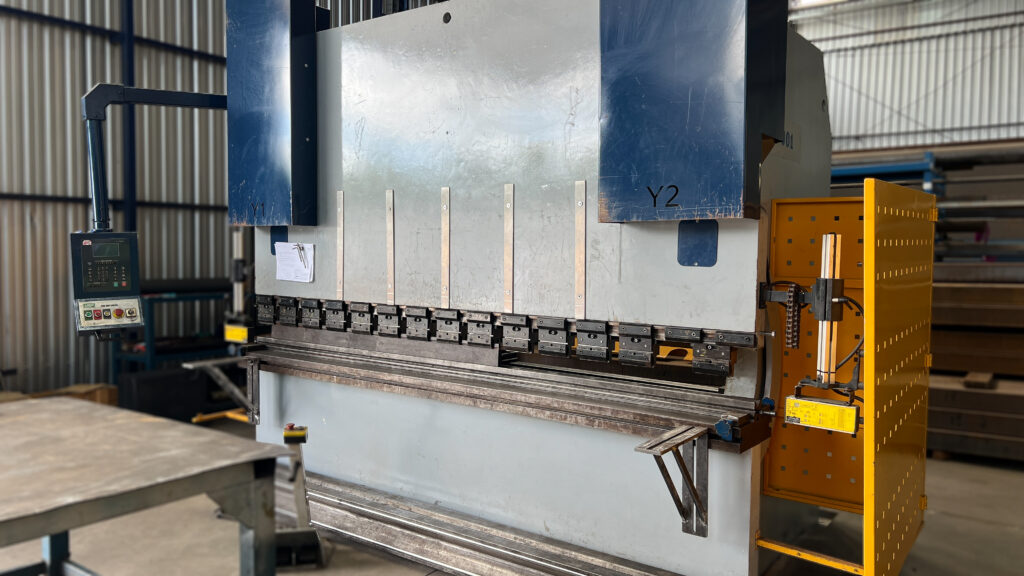
On a CNC press brake, the backgauge position and punch depth are numerically controlled. This makes it possible to repeat the same bend on dozens of parts with the same result, which is essential when an entire batch must be interchangeable.
Springback and bending sequence
After bending, steel tends to spring back slightly toward its original position. This springback varies with material and thickness and must be compensated in the program. The bending sequence is also planned to avoid collisions and ensure tool access on parts with multiple flanges.
The result is a part that arrives at assembly ready to fit, with no improvised adjustments at the workbench.