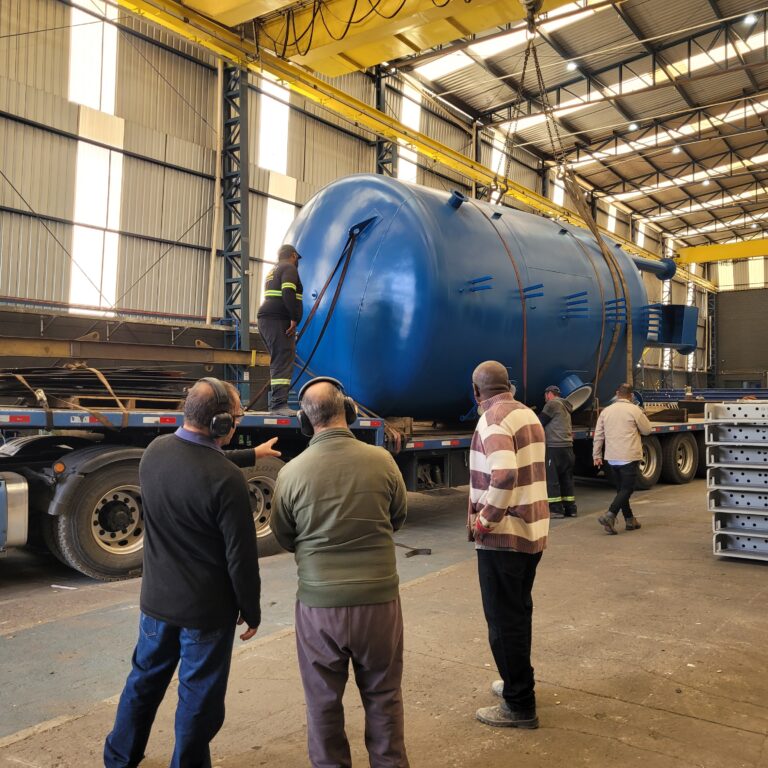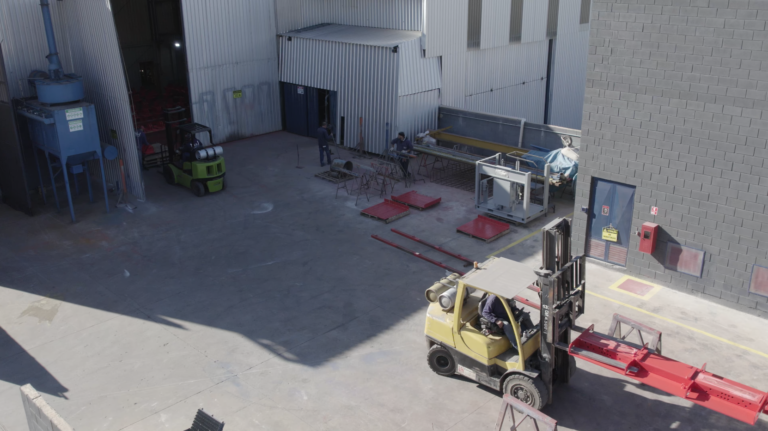

During a lift, the load tends to align vertically with the suspension point. If the device does not correctly account for the part’s center of gravity, the load tilts, rotates or swings — and with large components, any deviation becomes a risk to the part, the equipment and the people involved.
Design driven by the load
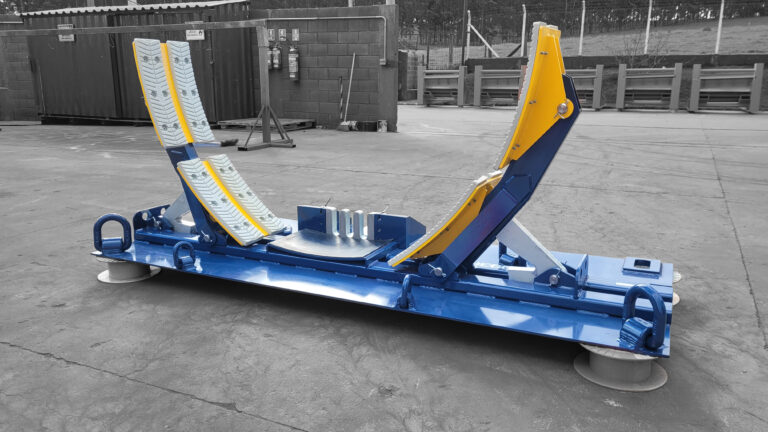
Spreader beams, lifting frames and other lifting devices are sized based on the load, the center of gravity and the geometry of each component. This defines the position of the lifting points, the length of the slings and the rigging configuration with the crane.
Stability throughout the operation
A good device keeps the part stable from lift-off to final positioning. For nacelles, hubs and gearboxes, this means controlling not only the lift but also the alignment needed for the next assembly step.