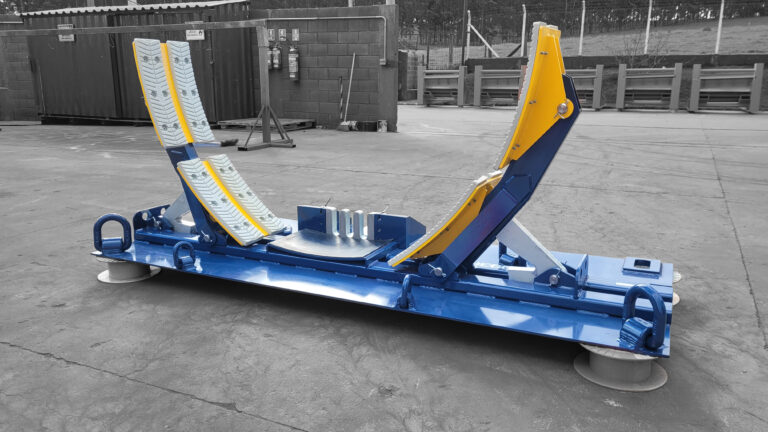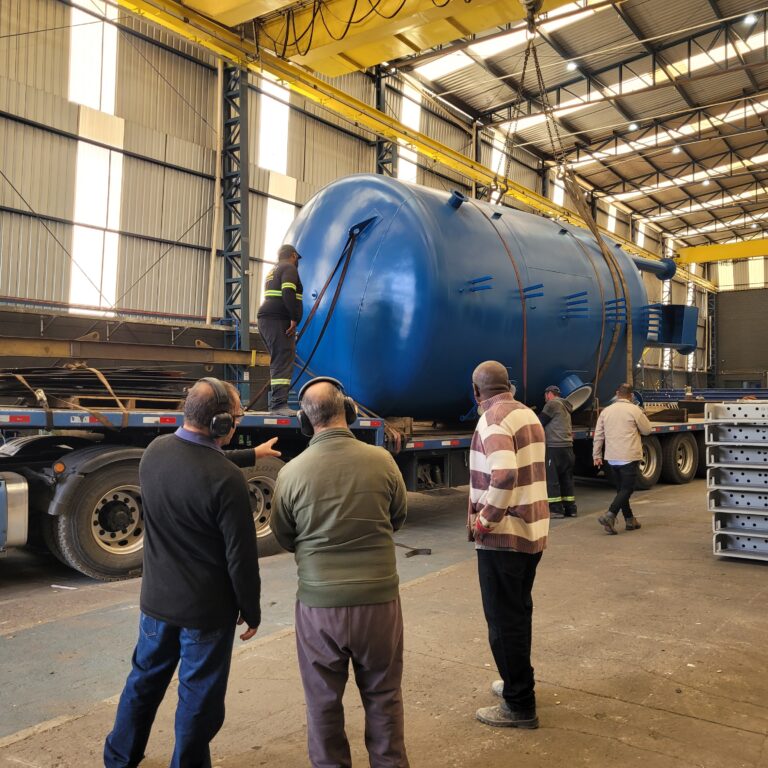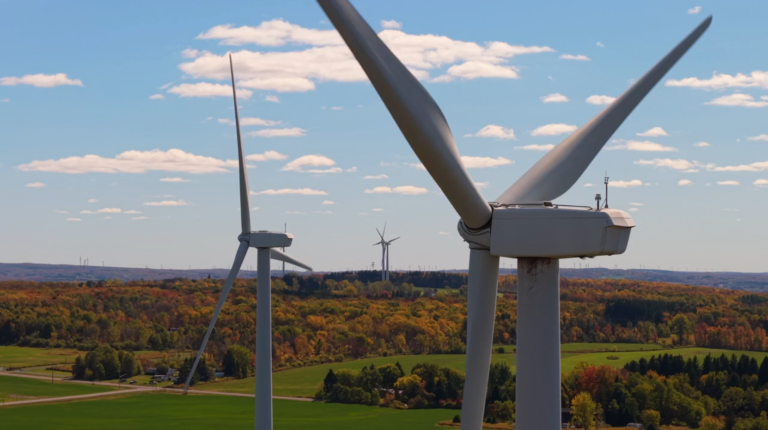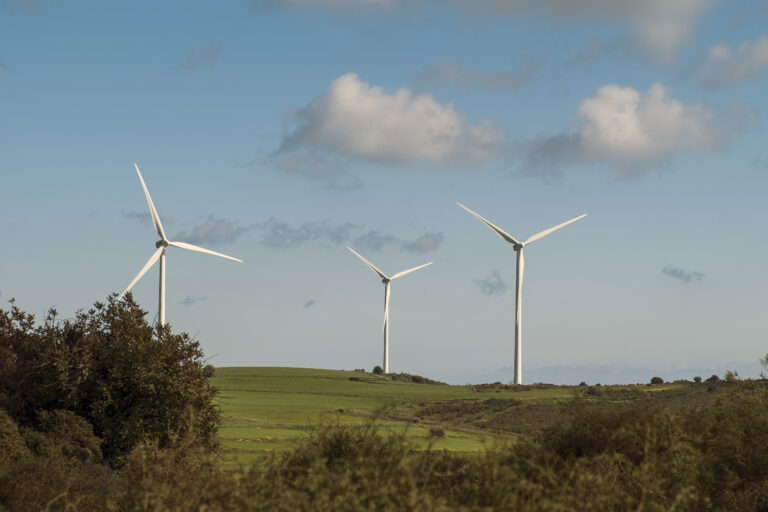
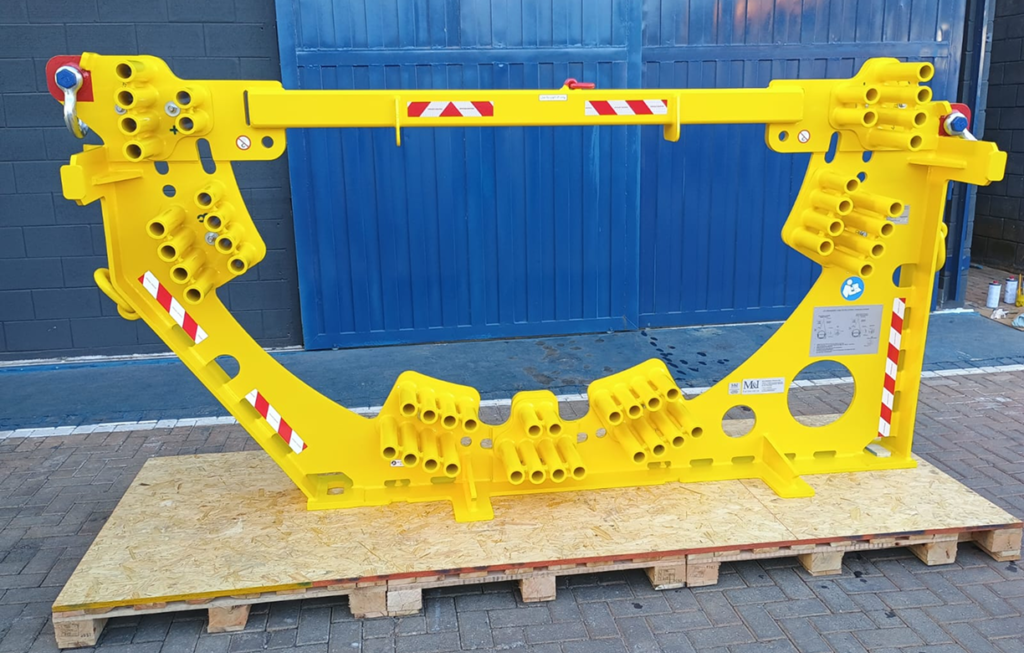

A wind component rarely travels in ideal conditions. Between the factory and the wind farm, blades, hubs and nacelles go through rough roads, port yards, intermediate lifts and, in many cases, the sea. The transport frame is what keeps the part intact along the whole way.
It all starts with the part
The starting point is the component itself: weight, dimensions, center of gravity and support points defined by the manufacturer. From this data, engineering defines how the load will be distributed across the structure, avoiding stress concentrations in sensitive areas of the part.
Dynamic loads, not just static ones
During transport, the load does not stay still. Braking, turns, vibration and ship motion create forces that go beyond the weight of the part. That is why the design takes these dynamic conditions into account, as well as the interface with the lashing and securing systems used in each mode of transport.
Manufacturing and traceability
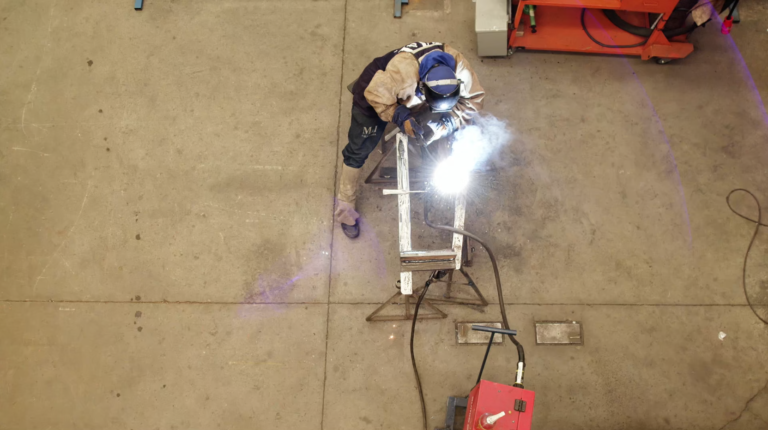
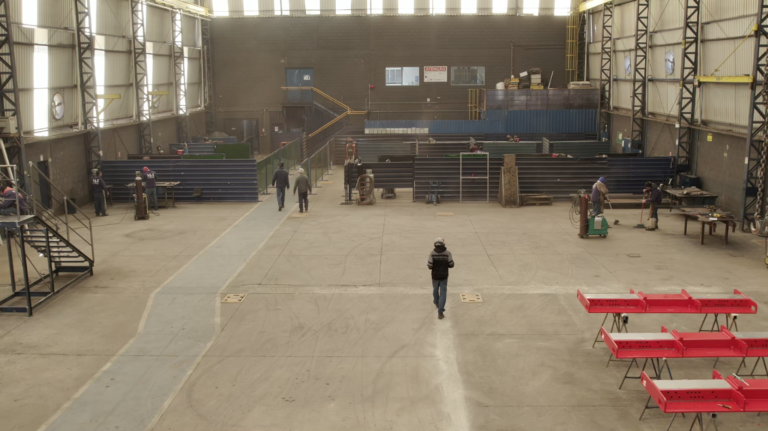
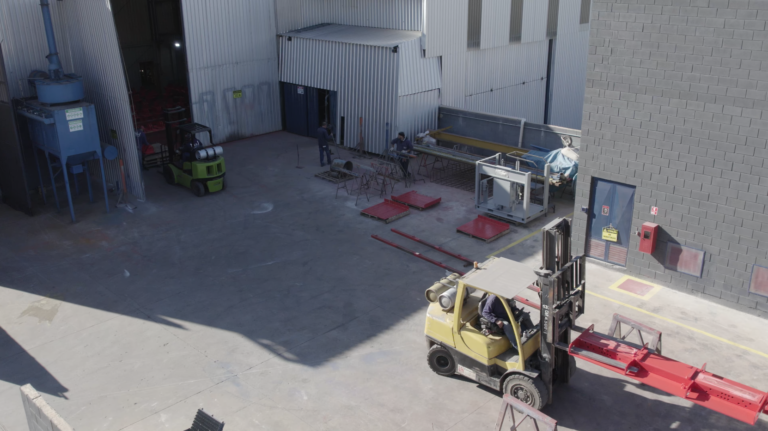
After design, manufacturing must reproduce exactly what was calculated. Dimensional control, weld inspection and material traceability ensure that the frame delivered matches the frame designed — and that it will behave as expected when loaded.